
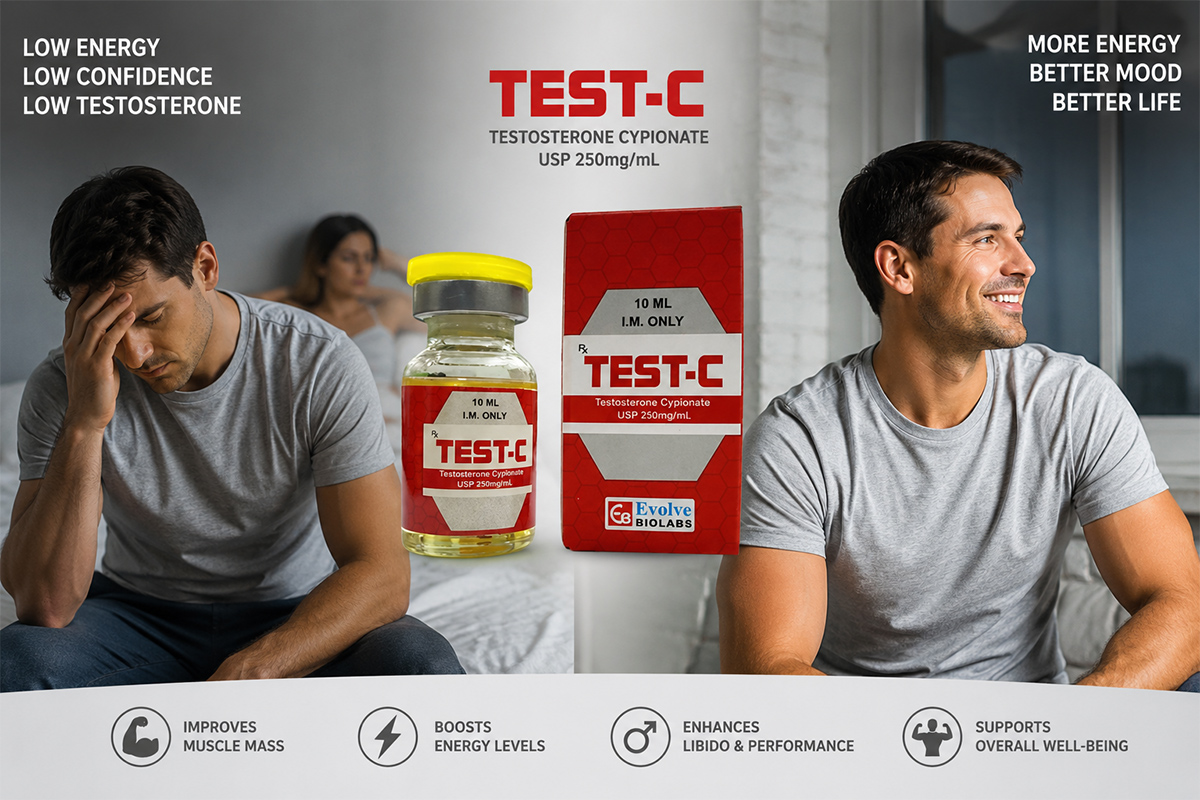
Test C (Testosterone Cypionate) is a long-acting testosterone formulation used under medical supervision to help manage conditions associated with low testosterone levels in men. Testosterone is an essential hormone responsible for maintaining muscle mass, bone strength, red blood cell production, sexual health, mood, and overall well-being. When the body does not produce enough testosterone, healthcare providers may recommend testosterone replacement therapy (TRT), and Test C is one of the commonly prescribed options.
This guide explains everything you should know about Test C, including its medical uses, how it works, dosage considerations, benefits, possible side effects, precautions, storage recommendations, and frequently asked questions.
What Is Test C?
Test C contains Testosterone Cypionate, a long-acting ester of testosterone that is administered by intramuscular injection. After injection, Testosterone Cypionate is gradually released into the bloodstream, allowing testosterone levels to remain stable for a longer period compared to shorter-acting testosterone formulations.
Because of its extended duration of action, Test C usually requires fewer injections than some other testosterone preparations. However, the exact dosing schedule depends entirely on an individual’s medical condition, hormone levels, and physician’s recommendation.
Testosterone replacement therapy should only be used after proper medical evaluation and laboratory testing confirming testosterone deficiency.
Understanding Testosterone and Why It Matters
Testosterone is the primary male sex hormone, although women also produce small amounts. It plays an important role throughout life and supports several body functions.
Testosterone helps maintain:
- Muscle growth and strength
- Bone density
- Healthy red blood cell production
- Sexual function and libido
- Mood and emotional well-being
- Energy levels
- Physical performance
- Male reproductive development
When testosterone levels become significantly lower than normal, various physical and emotional symptoms may develop.
How Test C Works
The active ingredient in Test C is Testosterone Cypionate. After intramuscular administration, the ester slowly releases testosterone into the bloodstream.
The released hormone works by restoring testosterone to physiologically appropriate levels in individuals diagnosed with testosterone deficiency. Once normal hormone levels are achieved, many body systems can function more effectively.
The slow-release profile of Testosterone Cypionate helps maintain hormone levels between injections when used according to the prescribed schedule.
Medical Uses of Test C
Healthcare professionals may prescribe Test C for specific medical conditions, including:
Primary Hypogonadism
Primary hypogonadism occurs when the testes cannot produce sufficient testosterone due to congenital disorders, injury, infection, or other medical causes.
Secondary Hypogonadism
This condition develops when the pituitary gland or hypothalamus fails to properly stimulate testosterone production.
Delayed Puberty (Selected Cases)
Under specialist supervision, testosterone therapy may occasionally be used in carefully selected adolescents experiencing delayed puberty caused by hormone deficiencies.
Hormone Replacement Therapy
In adult males with confirmed testosterone deficiency, Test C may be recommended as part of long-term testosterone replacement therapy after appropriate clinical assessment.
Symptoms of Low Testosterone
Patients who may require evaluation for testosterone deficiency often experience symptoms such as:
- Persistent fatigue
- Reduced energy
- Low libido
- Erectile dysfunction
- Loss of muscle mass
- Increased body fat
- Mood changes
- Depression
- Difficulty concentrating
- Reduced bone density
- Decreased physical performance
These symptoms alone do not confirm testosterone deficiency. Blood testing and clinical evaluation are necessary before starting therapy.
Benefits of Test C
When prescribed appropriately and monitored by a healthcare professional, Test C may provide several benefits.
Supports Healthy Testosterone Levels
The primary purpose of Test C is restoring testosterone levels in individuals with medically confirmed deficiency.
Helps Maintain Muscle Mass
Adequate testosterone contributes to maintaining lean muscle tissue and supporting muscle strength.
Supports Bone Health
Healthy testosterone levels are associated with improved bone mineral density, reducing the risk of bone loss over time.
Improves Energy Levels
Some patients report improvements in overall energy and reduced fatigue once testosterone levels return to the normal range.
Supports Sexual Health
Treatment may help improve libido and sexual function in men with testosterone deficiency.
Enhances Mood
Balanced testosterone levels may positively influence emotional well-being and quality of life in appropriately selected patients.
How Test C Is Administered
Test C is administered through intramuscular injection by a qualified healthcare professional or as instructed by a physician.
Important considerations include:
- Follow the prescribed injection schedule.
- Never increase or decrease the dose without medical advice.
- Maintain regular follow-up appointments.
- Rotate injection sites if instructed.
- Do not self-medicate without proper training.
The dosage and treatment duration vary depending on testosterone levels, age, response to therapy, and overall health.
Dosage Considerations
The dosage of Test C is individualized based on:
- Medical diagnosis
- Blood testosterone levels
- Age
- Treatment response
- Existing medical conditions
Routine blood tests are usually required during treatment to monitor hormone levels and adjust therapy when necessary.
Who Should Not Use Test C?
Test C may not be appropriate for everyone.
It is generally not recommended for individuals with:
- Known allergy to testosterone formulations
- Prostate cancer
- Male breast cancer
- Severe heart disease (unless advised by a physician)
- Untreated sleep apnea
- Certain liver or kidney disorders
- Elevated red blood cell count
A complete medical history should always be discussed before initiating therapy.
Possible Side Effects of Test C
Like all medicines, Test C may cause side effects, although not everyone experiences them.
Common side effects may include:
- Injection site pain
- Acne
- Oily skin
- Fluid retention
- Mood changes
- Headache
- Increased red blood cell count
Less common but more serious side effects may include:
- Shortness of breath
- Chest pain
- Swelling of the legs
- Severe allergic reactions
- Significant mood changes
- Changes in urination
Seek immediate medical attention if serious symptoms occur.
Monitoring During Treatment
Regular medical monitoring is essential while receiving Test C therapy.
Healthcare providers may periodically evaluate:
- Testosterone levels
- Complete blood count
- Liver function
- Prostate health
- Blood pressure
- Cholesterol levels
- Body weight
- Overall treatment response
Routine follow-up helps ensure treatment remains both safe and effective.
Drug Interactions
Before starting Test C, inform your healthcare provider about all medications, supplements, and herbal products you use.
Potential interactions may occur with:
- Blood thinners
- Insulin
- Diabetes medications
- Corticosteroids
- Certain hormone therapies
Never stop or start medications without professional guidance.
Lifestyle Tips While Using Test C
Individuals receiving testosterone therapy may benefit from healthy lifestyle habits, including:
Eat a Balanced Diet
Consume adequate protein, vegetables, fruits, healthy fats, and whole grains.
Exercise Regularly
Resistance training and regular physical activity help support muscle strength and overall fitness.
Sleep Well
Quality sleep plays an important role in hormone regulation and recovery.
Limit Alcohol
Excessive alcohol intake may negatively affect hormone balance and overall health.
Attend Follow-Up Visits
Routine appointments allow healthcare professionals to monitor treatment progress and adjust therapy if necessary.
Storage Instructions
Store Test C according to the manufacturer’s recommendations.
General storage guidelines include:
- Keep at room temperature.
- Protect from excessive heat.
- Avoid freezing.
- Keep away from direct sunlight.
- Store out of reach of children.
Always check the product label for specific storage instructions.
Frequently Asked Questions About Test C
Is Test C the same as Testosterone Cypionate?
Yes. Test C contains Testosterone Cypionate as its active ingredient.
Can Test C be used without a prescription?
No. Testosterone replacement therapy should only be used under medical supervision after proper diagnosis.
How often is Test C administered?
The injection schedule varies depending on individual treatment plans prescribed by a healthcare provider.
Does Test C require blood tests?
Yes. Regular blood tests help monitor testosterone levels and treatment safety.
Can women use Test C?
Testosterone therapy is generally prescribed for specific medical conditions and should only be used when recommended by a qualified healthcare professional.
Can older adults use Test C?
Older adults may receive testosterone therapy after careful evaluation of benefits and potential risks by their physician.
Is Test C intended for bodybuilding?
Test C is intended for medically approved therapeutic use under healthcare supervision. It should not be used for non-medical performance enhancement.
Can treatment be stopped suddenly?
Patients should always consult their physician before stopping testosterone therapy, as treatment decisions should be based on ongoing medical evaluation.
Conclusion
Test C is a Testosterone Cypionate formulation used as part of testosterone replacement therapy in individuals with medically confirmed testosterone deficiency. When prescribed appropriately and monitored through regular medical follow-up, it may help restore healthy testosterone levels and support muscle health, bone strength, energy, mood, and overall well-being.
Because testosterone therapy requires individualized dosing and ongoing monitoring, treatment should always be guided by a qualified healthcare professional. Proper diagnosis, routine laboratory testing, and adherence to prescribed therapy are essential for achieving the best outcomes while minimizing potential risks.
Learn More About Test C (Testosterone Cypionate)
If you would like to learn more about Test C (Testosterone Cypionate), testosterone replacement therapy, men’s health, and other healthcare topics, explore the educational resources shared by Akshar Lifescience.
Stay connected with Akshar Lifescience on:
- LinkedIn – Akshar Lifescience
- Instagram – Akshar Lifescience
- Facebook – Akshar Lifescience
For detailed product information about Test C (Testosterone Cypionate), you can also visit the official Test C product page on the Akshar Lifescience website.
Disclaimer: This article is intended for educational purposes only and should not be considered medical advice. Test C (Testosterone Cypionate) should only be used under the supervision of a qualified healthcare professional. Always consult your doctor before starting, stopping, or changing any treatment.